The hardest part of your next role isn't the job. It's who you'll have to stop being.
We help senior leaders make the move from leading at a function level to leading at an enterprise level, the step where capability stops being the thing that carries you. Start with a 15 to 45 minute audit that shows you the four dimensions that decide whether you thrive.












 Dubai TourismGovernment of Abu DhabiDubai TourismGovernment of Abu Dhabi
It doesn't just ask how you'd rate yourself. It checks.
Most transitions fail on identity shift, not capability. So this isn't another competency questionnaire. It measures whether you can let go of the identity that got you here, and it checks your self-belief against real evidence.
Self-rating
The leader rates themselves 1 to 5 on a leadership behaviour.
Reality check
“Can you recall a specific recent example?” Yes / Not sure / No.
Evidence multiplier
From 1.00× for a confident, evidenced rating down to 0.65× where no evidence exists.
A confident 5 with no evidence scores lower than an honest 4 with a real example. That is the mechanic that catches the blind spots strong self-ratings nobody has ever tested.
27–46% of executive transitions are judged failures or disappointments within two years. The gap is rarely technical (McKinsey, Keller & Meaney).
No other tool asks directly: not ‘can you do the job’, but ‘can you stop being the person who did the last one, and do you have what it takes to endure becoming someone new’. The audit reveals the state a person is in, not a person’s traits.
Ommaar Ismail
The unique mechanics
Every self-rating has to be backed by a real, recent example, or it doesn’t count. Confidence alone isn’t evidence.
Sixteen hidden rules catch the combinations, not the individual scores, that actually predict where someone gets stuck.
Nothing generative runs when someone takes it. Same answers, same result, every time. It’s a fixed model, not a conversation with a machine.
One diagnostic. Four pillars. 35 questions.
- 0130%Role ReadinessCan you do the job?
- 0235%Identity Shift ReadinessCan you become the leader this role needs?
- 0315%Transition RiskWhat might derail you?
- 0420%Psychological ReadinessCan you withstand the journey?
Combined into a single Overall Readiness Score (0–100%). 70% is the benchmark for a genuinely viable transition.
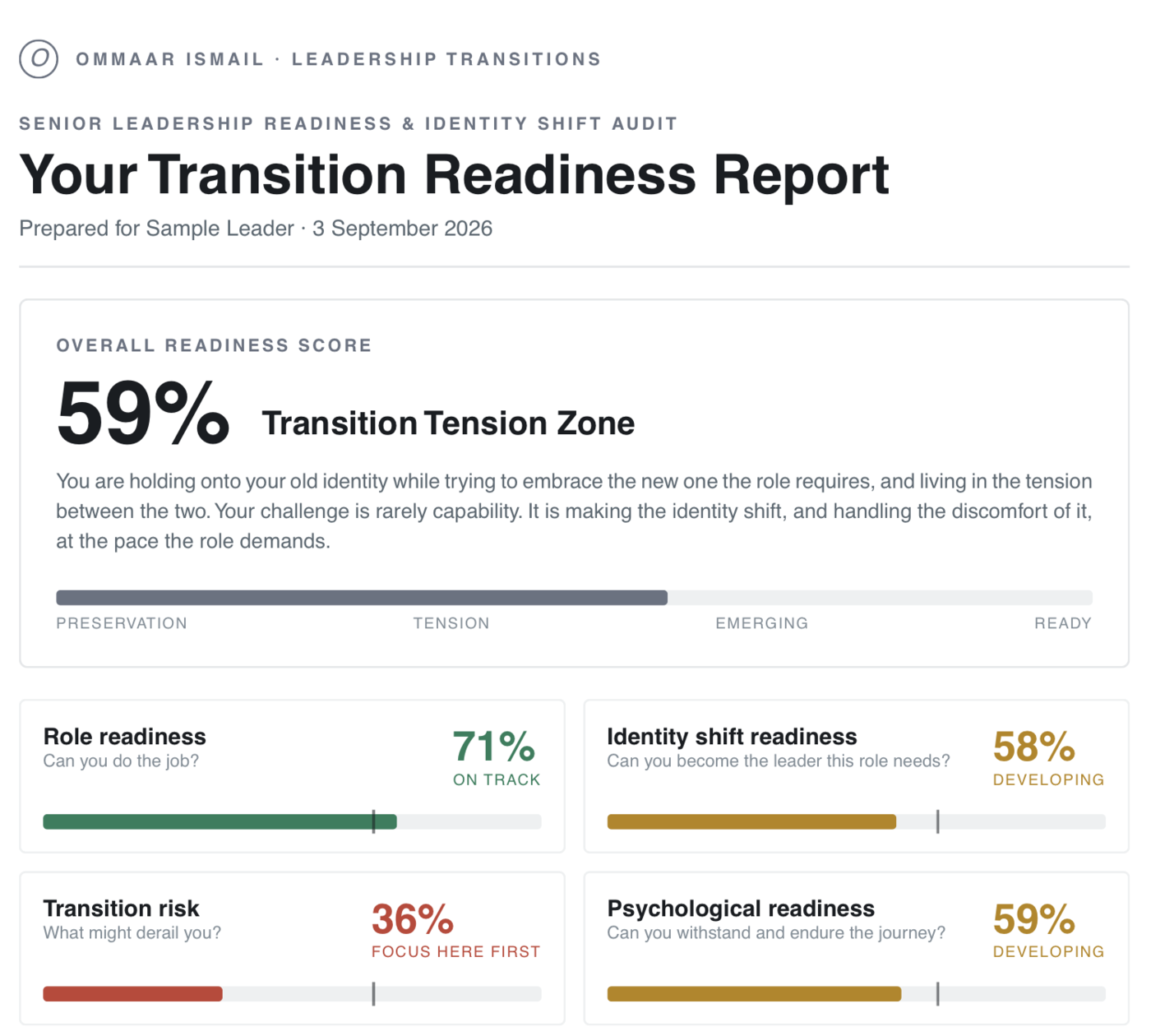
You get an Enterprise Readiness Score, your archetype and anchor, the patterns most likely to derail your first ninety days, and a development roadmap, on screen instantly and as a PDF you keep.
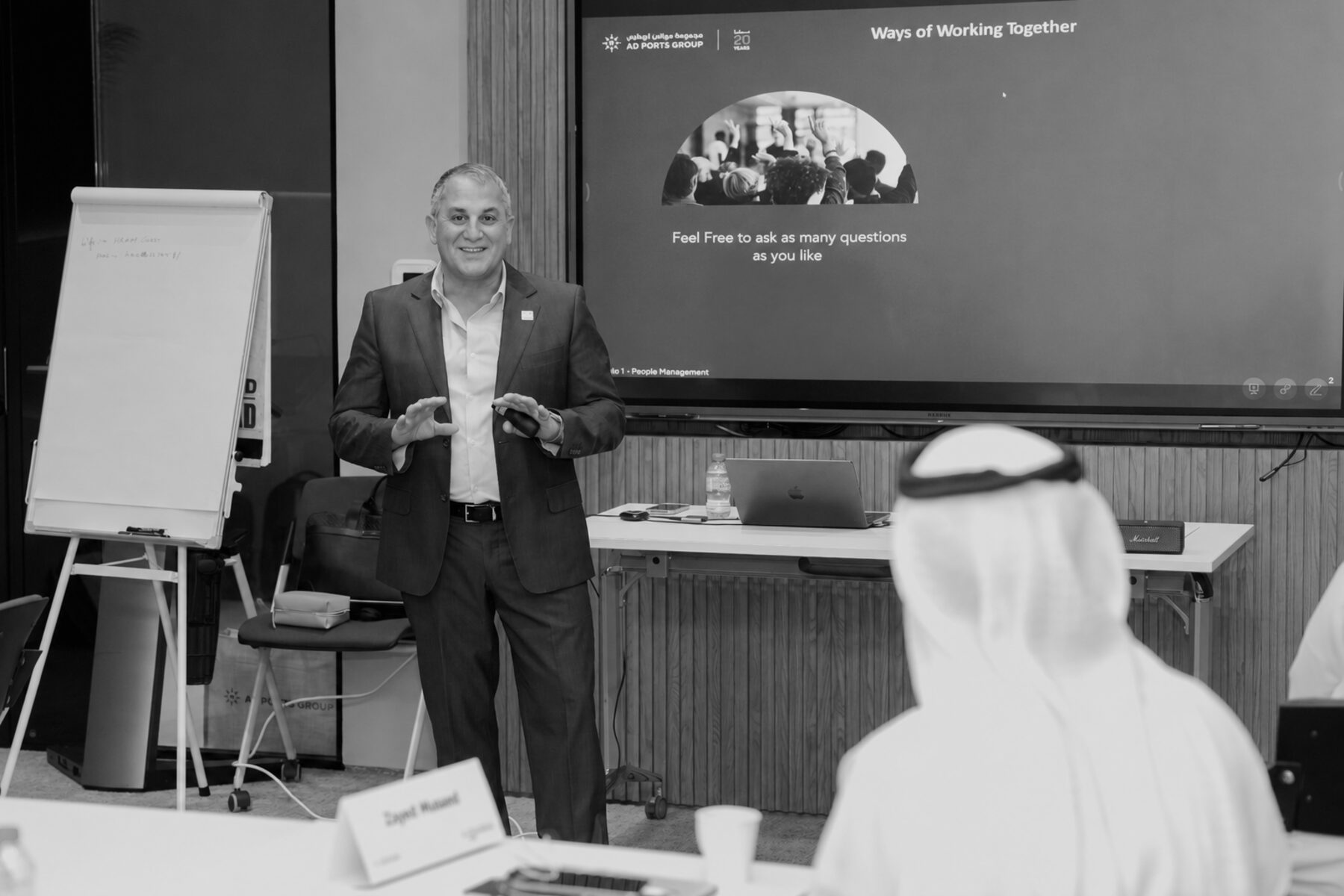
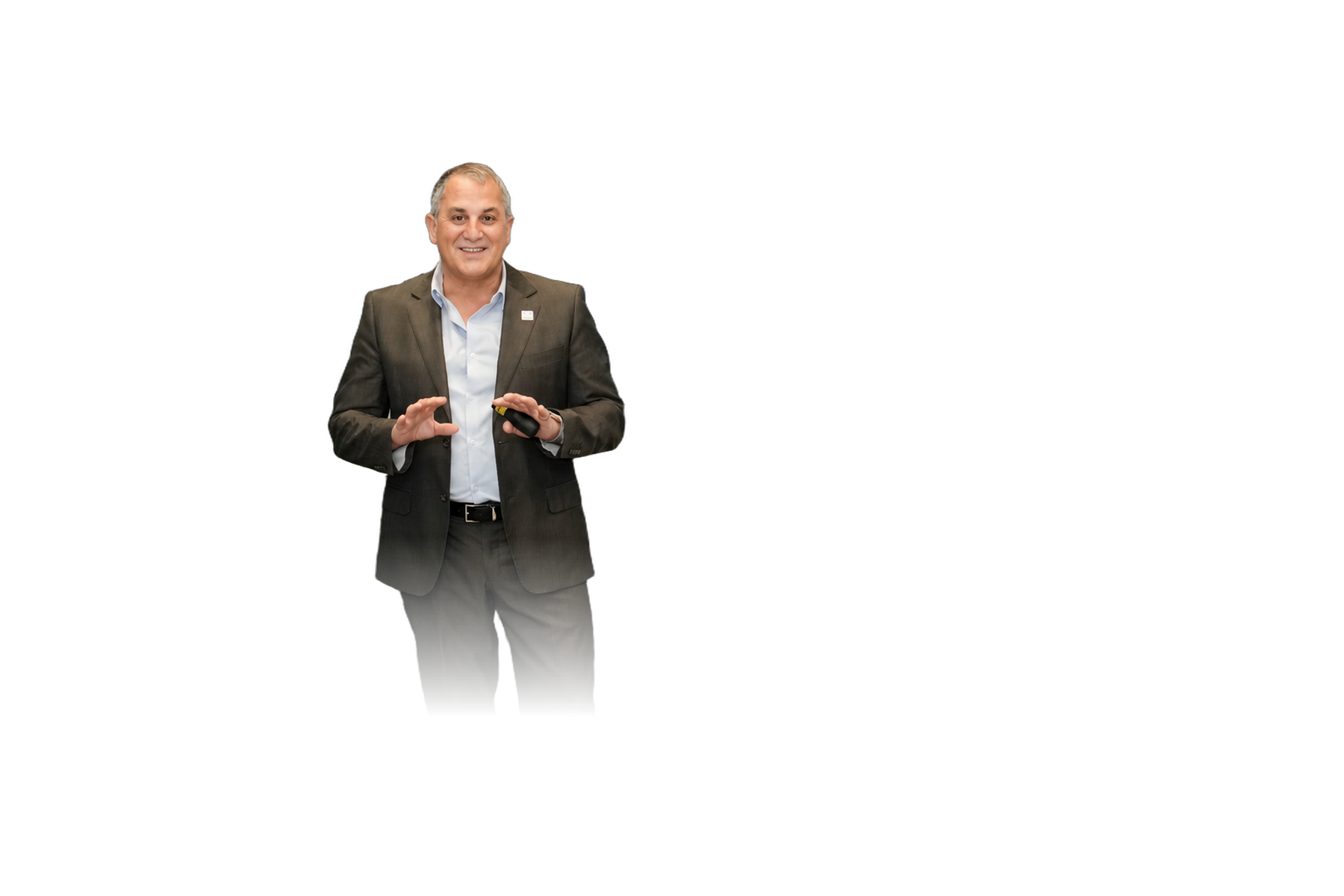
Ommaar Ismail
For more than twenty-five years, Ommaar has coached senior leaders and executive teams, personally and professionally, through the transition that most defines a career and a life: the move from expert to enterprise leader, or the version of who they are aspiring to become.
His work spans the UK, Europe, the USA and the GCC, from FTSE and global names to government and fast-scaling businesses. He specialises in assessing and developing senior leaders, equipping executives and leadership teams with the mindset, skillset, behaviours and capabilities required to lead effectively in complex and evolving business environments.
Ommaar is recognised for creating psychologically safe, highly engaging learning environments where leaders are challenged to think differently, reflect deeply and translate insight into meaningful action. His facilitation blends evidence-based frameworks, experiential learning, strategic dialogue and gamification, ensuring concepts are not only understood but experienced and consistently applied in the workplace and everyday life.
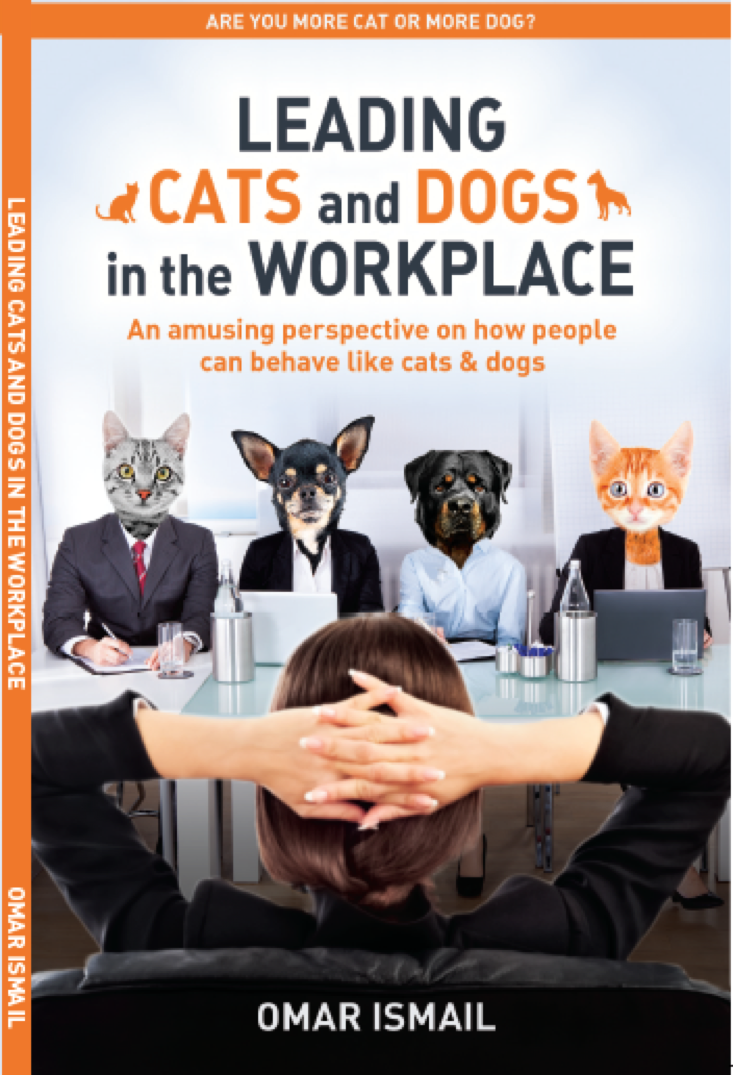
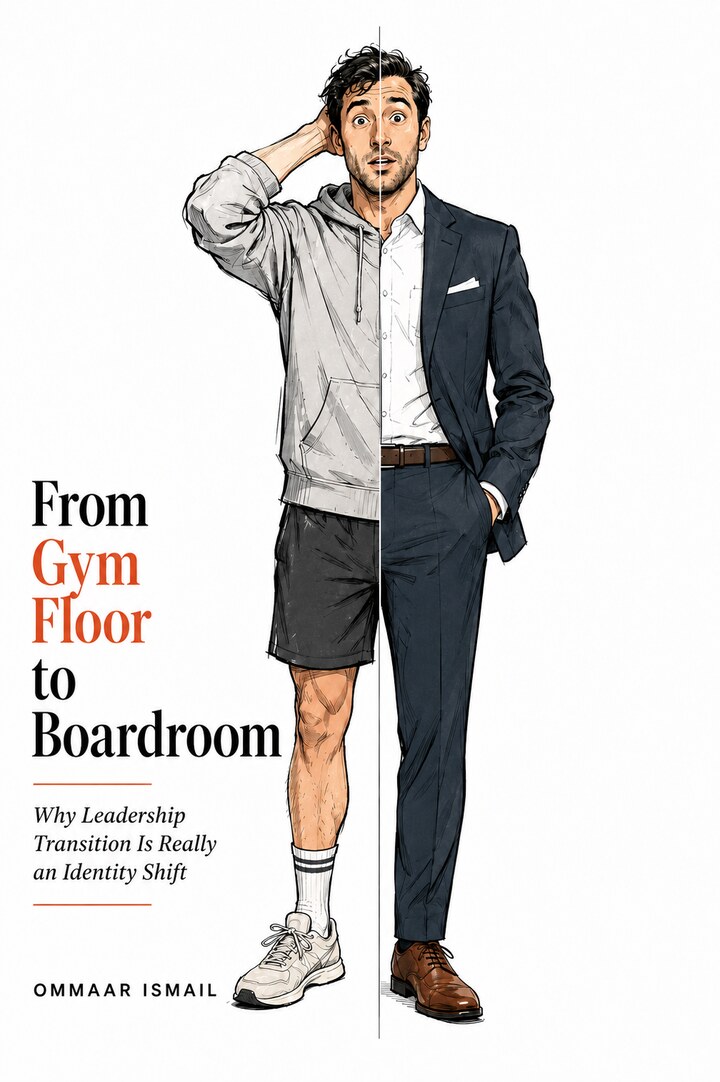
He is the author of Leading Cats and Dogs in the Workplace, and is finalising his second book, From Gym Floor to Boardroom. He is the architect of the Enterprise Leadership Identity Shift Transition Audit, and creator of the Hyper HR Impact and Influence Blueprint.
The Enterprise Leadership Transition: a 90-day coaching programme.
Letting Go
Name the anchor, understand the psychological need it meets, and recognise the triggers that pull you back to it.
Becoming
Practise the new behaviours, asking “what” and “why” instead of “how”. Where fortitude gets built.
Affirming
Embed the new identity and the structures that prevent reversion, so it feels natural, not forced.
Two books. One idea: leadership is an identity shift.
Where are you in your transition?
Start with a 15 minute audit built to reveal what a competency questionnaire never will.
Free. No sign-up wall. Your report is yours to keep.